How to Trace Stolen Cryptocurrency: Blockchain Forensics Explained
Discovering that cryptocurrency has been sent to a fraudulent investment platform, scammer-controlled wallet, or unauthorized address can be overwhelming. Victims often search for ways to trace their funds, identify where the assets went, and understand whether recovery is still possible. Blockchain forensics can help investigators follow cryptocurrency transactions, document the movement of digital assets, and identify potentially relevant wallet addresses or exchange connections. However, tracing funds is not the same as recovering them. Understanding what blockchain transaction tracing can accomplish and where its limitations begin is an important first step toward making informed decisions after cryptocurrency fraud.
What Is Blockchain Forensics?
Blockchain forensics is the process of analyzing blockchain transaction data to understand how digital assets move between wallet addresses, smart contracts, and other blockchain services. Unlike traditional banking databases, many public blockchains allow anyone to inspect transaction records. These records can provide valuable information about transfers, although they do not automatically reveal the real-world identity of the people controlling the wallets.
A typical blockchain transaction record may include:
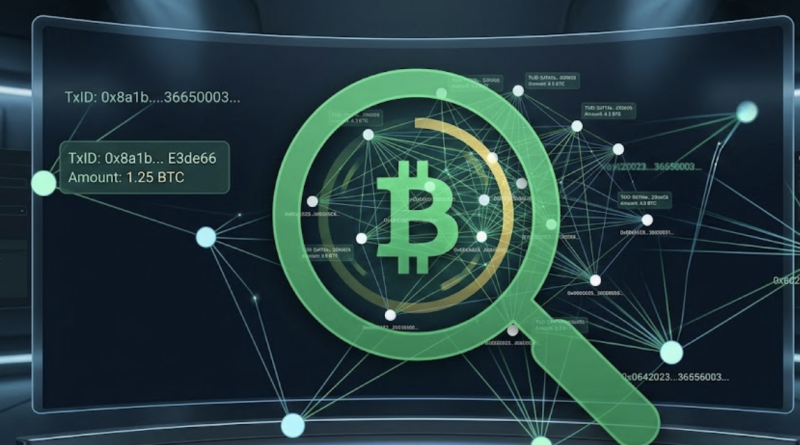
- Transaction ID (TxID): A unique identifier used to locate a particular transaction.
- Sending and receiving addresses: The blockchain addresses involved in the transfer.
- Asset and amount: The cryptocurrency or token transferred and the recorded quantity.
- Block information: Details such as block height and the transaction’s recorded timestamp, depending on the blockchain.
- Transaction history: Related transfers that may help analysts follow the movement of funds.
Blockchain forensic analysis organizes this information into a transaction history that can be examined for patterns, connections, and potential investigative leads.
How Does Crypto Transaction Tracing Work?
Cryptocurrency tracing involves examining blockchain records to reconstruct the observable movement of digital assets. The process depends on the blockchain, the available data, and the complexity of the transactions.
1. Identifying the Original Transaction
The process typically begins with the transaction ID, wallet address, or other available transfer details. Analysts can use blockchain explorers and appropriate analytical tools to examine the transaction, confirm the recorded asset movement, and identify the addresses involved. This establishes a starting point for investigating the movement of the funds.
2. Mapping Transfers Between Wallets
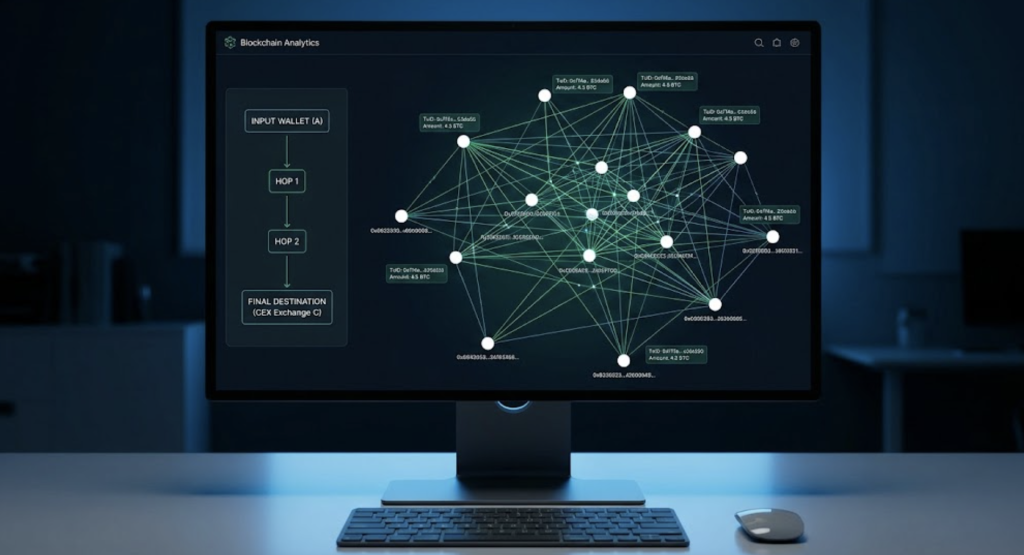
Stolen cryptocurrency may pass through multiple wallet addresses before reaching another service or destination. Transaction mapping follows observable transfers between addresses and records the sequence of movements. Analysts may examine interactions with smart contracts, decentralized exchanges, cross-chain bridges, and other services where supported by the available data. However, not every wallet belongs to a different person, and not every transaction necessarily represents a direct transfer between individuals. Correctly interpreting the transaction context is essential.
3. Examining Potential Exchange Connections
Some cryptocurrency transactions involve addresses associated with centralized exchanges or other custodial services. When a reliable attribution is available, identifying a potential exchange connection can provide a useful investigative lead. The service may hold account records or other information that could assist an investigation. Public blockchain data alone generally cannot reveal the account holder’s verified identity. Access to customer records depends on the service, its available records, and applicable legal or law enforcement procedures. Even identifying an account holder does not automatically establish who controlled the funds or committed the fraud.
4. Organizing Findings Into an Evidence Report
Raw blockchain records can be difficult for non-technical readers to interpret. A structured blockchain analysis report may include:
- Relevant transaction IDs and wallet addresses.
- A chronological record of observed transfers.
- Transaction-flow diagrams showing relationships between addresses.
- Supporting blockchain explorer records and timestamps.
- Clearly identified assumptions, limitations, and attribution confidence.
- Potential investigative leads requiring further verification.
Depending on the circumstances, this documentation may assist discussions with law enforcement, legal counsel, or the compliance team of a relevant cryptocurrency service.
Can Blockchain Forensics Trace Stolen Crypto?
In many cases, investigators can trace at least some of the observable movement of cryptocurrency after a fraudulent transfer. The extent of the analysis depends on the blockchain, available transaction records, the assets involved, and the methods used to move the funds.
Blockchain tracing may help establish:
- Which addresses received or transferred particular assets.
- How funds moved through a sequence of recorded transactions.
- Whether certain addresses have credible, independently supported connections to known services.
- Where further investigation may be worthwhile.
- What transaction evidence should be preserved for a formal report.
There are important limitations. Funds may move through multiple services, swap between different assets, cross blockchain networks, or enter systems where attribution is difficult. Analysts may also be unable to establish who controls a particular address from public records alone. A transaction trail should therefore distinguish confirmed blockchain activity from inferred ownership, probable connections, and unresolved questions.
Does Tracing Stolen Cryptocurrency Guarantee Recovery?
No. Blockchain tracing is an analytical process, not a mechanism for retrieving funds. Even when the movement of cryptocurrency is clearly documented, recovery may depend on whether assets remain accessible, whether a service can identify or restrict relevant accounts, whether lawful intervention is available, and whether the circumstances support further action. A useful forensic report can support an investigation, but it cannot guarantee that funds will be frozen, returned, or recovered.
What Are the Limitations of Blockchain Analysis?
Understanding the boundaries of blockchain forensics helps prevent unrealistic expectations and misleading claims.
Blockchain Transactions Are Generally Irreversible
Most confirmed blockchain transactions cannot simply be canceled through a customer support request or reversed by an independent tracing service. Exceptional interventions may exist in particular blockchain systems or custodial environments, but these are not a general recovery mechanism. The practical response is to preserve transaction details promptly and determine whether any relevant service or authorized authority can take action.
Public Wallet Addresses Do Not Automatically Reveal Identity
A wallet address is not a public identity record. Blockchain data generally does not disclose a person’s legal name, home address, or government identification. Analysts may sometimes associate addresses with known services or entities using available evidence. Establishing the identity of an individual typically requires additional information obtained through appropriate channels. Address attribution should not be treated as definitive proof of personal identity or criminal responsibility.
Private Analysts Cannot Independently Seize Assets
Blockchain forensic analysts can examine data, document findings, and identify potential investigative leads. They do not automatically have the authority to freeze exchange accounts, compel disclosure of private customer information, or seize cryptocurrency held by another party. Those actions depend on the circumstances, the relevant service, and applicable legal or law enforcement processes.
Cross-Chain Transfers and Obfuscation Can Complicate Tracing
Cryptocurrency may move between networks through bridges, be exchanged for other tokens, or pass t hrough services that complicate attribution.These activities do not necessarily make all tracing impossible, but they can introduce gaps, uncertainty, and additional analytical requirements. A responsible report should explain those uncertainties rather than promise complete visibility into every movement of funds.
How to Document Cryptocurrency Fraud
If you suspect that cryptocurrency has been stolen, preserving accurate information can help you communicate the incident to the relevant organizations.
Step 1: Record Transaction Details
Collect the transaction IDs, sending and receiving wallet addresses, asset types, quantities, timestamps, and blockchain networks associated with the transfers. Where possible, preserve the original transaction records and links to the relevant blockchain explorer pages.
Step 2: Preserve Off-Chain Evidence
Save information that may explain how the transaction occurred, including:
- Messages and emails with the suspected scammer.
- Website URLs and account details associated with the platform.
- Deposit instructions and payment receipts.
- Screenshots of account balances, withdrawal attempts, or relevant communications.
- Records of transfers made to the platform or wallet.
Keep original files where possible, and avoid editing evidence in ways that could obscure its context.
Step 3: Contact Relevant Services and Report the Incident
If an exchange or custodial service was involved, contact its official support or fraud-reporting channel. Explain what happened and provide the relevant transaction details. Consider reporting the incident to the appropriate law enforcement or cybercrime reporting body in your jurisdiction. In the United States, the FBI’s Internet Crime Complaint Center accepts reports of suspected online crime at https://www.ic3.gov. Reporting does not guarantee recovery, but it creates a record that may assist subsequent investigative steps.
Step 4: Consider Independent Legal or Forensic Guidance
For substantial losses or complex transaction histories, you may wish to consult a qualified professional who can explain the available options. Depending on the circumstances, useful support may include blockchain transaction analysis, evidence organization, legal advice, or assistance communicating with relevant service providers. Before engaging a service, confirm its actual scope, deliverables, fees, qualifications, and limitations.
How to Recognize Cryptocurrency Recovery Scams
People who have already lost cryptocurrency may be targeted again by individuals or businesses promising to retrieve their funds. Be cautious of claims that cannot be independently verified.
Warning signs include:
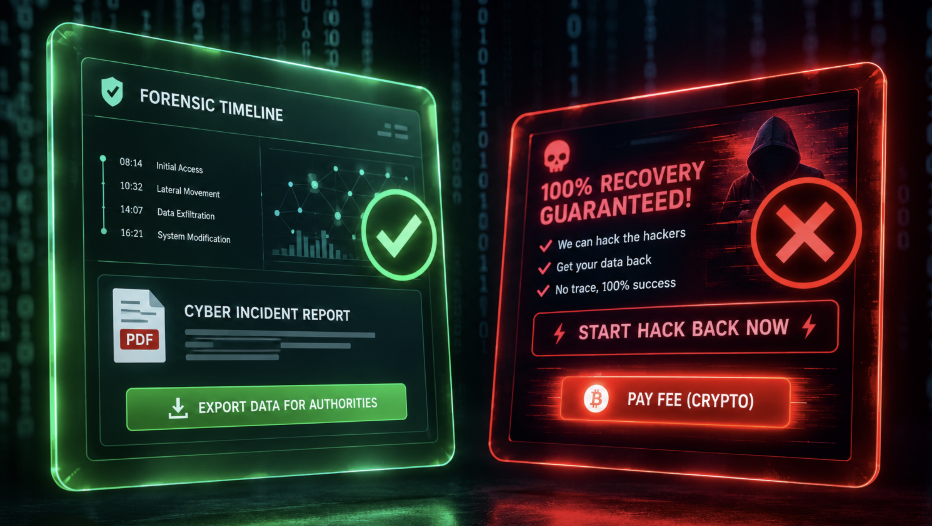
- Guaranteed recovery: No legitimate tracing report can guarantee that stolen assets will be returned.
- Fees to unlock recovered funds: Requests to send additional cryptocurrency to release supposedly recovered assets warrant particular scrutiny.
- Claims of hacking back: Promises to break into private wallets or forcibly retrieve cryptocurrency are not a credible substitute for lawful recovery procedures.
- Guaranteed identity disclosure: Public blockchain records do not automatically reveal a wallet owner’s verified identity.
- Claims of special access: Be skeptical of unsupported claims of privileged access to exchanges, law enforcement, or blockchain systems.
- Pressure to act immediately: High-pressure sales tactics and requests for sensitive credentials are serious warning signs.
Before sharing information or paying for assistance, independently verify the provider and understand exactly what it will deliver. Never share your wallet seed phrase, private keys, passwords, or authentication codes with a tracing or recovery service.
Frequently Asked Questions
Can a wallet address be traced?
Public blockchain wallet addresses can often be examined through transaction records. Analysts may follow recorded transfers and identify possible connections to known services. However, tracing an address does not automatically establish who controls it.
Can blockchain forensics identify a crypto scammer?
Blockchain analysis may generate investigative leads, including potential connections to known services or entities. Confirming an individual’s identity generally requires additional evidence and may require information obtained through lawful procedures.
Can stolen cryptocurrency be recovered after it has been transferred?
Recovery depends on the circumstances. Relevant factors may include where the assets moved, whether they remain accessible, whether a service can take appropriate action, and whether legal or law enforcement intervention is available. Tracing alone does not guarantee recovery.
What information is needed for crypto transaction tracing?
Useful starting information includes transaction IDs, wallet addresses, blockchain networks, asset types, transfer amounts, and relevant dates. Communications, platform URLs, and payment receipts may also help establish the context of the incident.
Is blockchain forensic analysis the same as crypto recovery?
No. Blockchain forensic analysis examines and documents transaction activity. Recovery involves additional practical, legal, or investigative steps and depends on circumstances beyond the tracing process itself.
How can I avoid cryptocurrency recovery scams?
Avoid providers that guarantee results, request private keys or seed phrases, promise unauthorized access to wallets, or demand unexplained payments to release funds. Verify the provider’s identity, business practices, and actual service deliverables before proceeding.
How Equity Recourse Can Help With Blockchain Evidence
Understanding the movement of cryptocurrency after suspected fraud can be an important part of documenting an incident. Equity Recourse provides digital asset documentation, transaction mapping guidance, and pre-litigation evidence organization. Our focus is helping clients organize complex transaction information into clear, structured documentation that can support discussions with legal counsel and relevant authorities. Depending on the scope of an engagement, documentation may include transaction records, chronological summaries, wallet-flow diagrams, and supporting materials for further review. Blockchain tracing does not guarantee identification of a perpetrator, an asset freeze, or financial recovery. Our approach emphasizes verifiable information, transparent limitations, and documentation that supports informed next steps.
Need Help Organizing Your Cryptocurrency Transaction Records?
If you are documenting a suspected cryptocurrency fraud incident, Equity Recourse can help you understand the documentation process and determine what information may be useful for further review.
Contact Equity Recourse to discuss your documentation needs.