
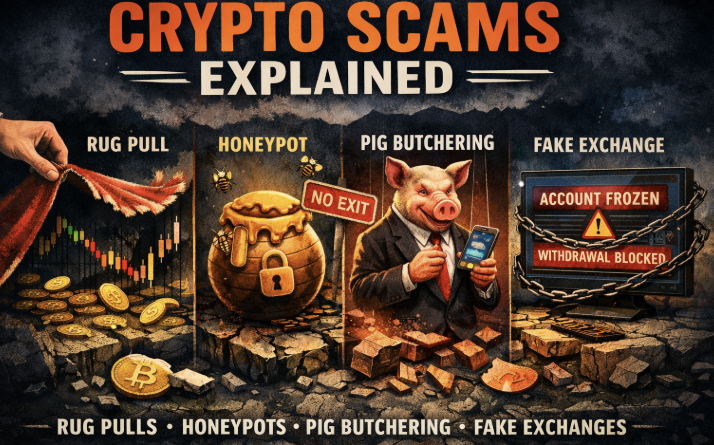
Inside the World of Crypto Fraud: Rug Pulls, Honeypots & Investment Traps
Today, investors searching terms like crypto rug pull, honeypot token, pig butchering scam, or blocked withdrawal from a crypto exchange are often trying to understand what went wrong. This guide breaks down how the most common crypto scams work, why they succeed, and the warning signs investors need to recognize early.
They Promised Financial Freedom. It Ended in Silence.
It didn’t start with greed, It started with curiosity. A message on LinkedIn. A friendly conversation on WhatsApp. A new crypto token everyone seemed excited about. A trading platform that looked polished and professional. At first, everything worked. The dashboard showed profits. The account balance kept growing. Small withdrawals went through without issue. It felt legitimate.
Then came the shift.
A larger deposit was required to unlock earnings. A token suddenly couldn’t be sold. A withdrawal was denied due to “tax verification.” Support stopped responding. And just like that the money was gone. Not because the victim was careless. But because they were targeted. Behind terms like rug pull, honeypot, and pig butchering are real families, real retirement savings, and real financial damage. Understanding these tactics is no longer optional it’s protection.
1. Rug Pull: When Developers Disappear With the Liquidity
A rug pull happens when a crypto project attracts investor funds and then abruptly drains liquidity or abandons the token, causing the price to collapse.
One of the most well known examples was Squid Game Token, inspired by the Netflix series Squid Game. The token surged in value, fueled by hype and fear of missing out. What most buyers didn’t realize was that the smart contract restricted selling. When the price peaked, the developers withdrew millions and vanished.
The chart looked like explosive growth followed by a vertical drop.
By the time investors understood what happened, liquidity was gone.
2. Honeypot Tokens: You Can Buy, But You Can’t Sell
A honeypot scam is more subtle. The token appears tradable. You can purchase it easily. The price even rises.
But when you attempt to sell, the transaction fails.
Behind the scenes, the contract code blocks non approved wallets from exiting. Only the developer wallet can sell.
Victims often spend hours troubleshooting gas fees and slippage settings, unaware that the trap was built into the contract from the beginning.
The illusion of profit is what makes honeypots so effective.
3. Pig Butchering: The Long Game
Pig butchering scams combine emotional manipulation with fake crypto investments. The name refers to “fattening” the victim over time before taking everything.
The process usually begins casually a friendly connection through social media or a professional networking site. Over days or weeks, trust is built. Eventually, the conversation turns to crypto trading. The scammer introduces a “private platform” or insider opportunity.
The trading site looks sophisticated. Profits appear steady and consistent. Sometimes small withdrawals are allowed early on to build credibility.
Then comes the escalation: larger deposits, urgency, promises of limited time opportunities. When the victim tries to withdraw substantial funds, they are told additional payments are required for tax clearance, anti money laundering verification, or account unlocking.
Authorities including the U.S. Department of Justice have prosecuted international operations running these schemes at scale. These are not isolated individuals they are organized networks using scripted psychological tactics.
Victims are not foolish. They are groomed.
4. Pump and Dump Schemes
Pump and dump operations artificially inflate a token’s value through coordinated hype and misleading promotion. Once prices spike, insiders sell, leaving late investors with heavy losses.
The U.S. Securities and Exchange Commission has repeatedly warned about social media driven crypto manipulation, especially where influencers promote tokens without disclosing compensation.
These schemes thrive on urgency and manufactured social proof.
5. Fake Crypto Exchanges and Blocked Withdrawals
Perhaps the most devastating category involves fake exchanges.
The platform looks legitimate. Charts update in real time. Account balances grow convincingly. Customer service responds politely.
But when a significant withdrawal is requested, new conditions appear. A tax must be prepaid. An account must be upgraded. A compliance deposit is required.
This is the turning point many victims search for online trying to understand whether blocked withdrawals are normal.
They are not.
Legitimate exchanges deduct fees from your balance. They do not require additional external deposits to release your own funds.
If you have already reached this stage, the most important step is to stop sending additional payments. Many victims lose more trying to recover the initial loss than they did in the original deposit.
Preserve everything instead. Transaction IDs. Wallet addresses. Screenshots. Chat logs. Scam websites often disappear without notice, and evidence matters.
Reporting to agencies such as the Federal Bureau of Investigation or filing a complaint through the Federal Trade Commission helps establish patterns, especially in large scale operations.
And one more warning: after posting about a loss publicly, many victims are approached by “recovery agents” promising guaranteed fund retrieval. This is often a second scam layered on top of the first.
No legitimate professional guarantees recovery.
Why These Scams Continue to Work
Crypto scams succeed because they blend technical complexity with human psychology. They create urgency. They simulate credibility. They manufacture trust before triggering pressure.
Most victims are educated professionals who simply encountered a highly engineered deception.
Shame keeps people silent. Silence allows the cycle to continue.
Final Thoughts
Understanding terms like rug pull, honeypot, pig butchering, and fake exchange scams is about recognizing patterns before or even after damage occurs.
If something feels wrong, pause.
If withdrawals are blocked and additional deposits are requested, step back.
If profits seem guaranteed, question them.
Education is not about fear. It’s about awareness.
And awareness is what breaks the pattern.