
Crypto Phishing Attacks in 2026: How Scammers Are Targeting Wallet Users and How to Stay Safe
Cryptocurrency phishing attacks have become more sophisticated in 2026. From fake emails to physical letters sent to hardware wallet owners, scammers are evolving their tactics to exploit trust, urgency, and fear.
If you hold cryptocurrency especially in a hardware wallet, understanding these emerging threats is essential to protecting your digital assets.
What Is Crypto Phishing?
Crypto phishing is a type of social engineering attack where scammers impersonate legitimate companies, exchanges, or wallet providers to trick users into revealing sensitive information.
In most cases, attackers attempt to steal:
- Seed phrases (recovery phrases)
- Private keys
- Login credentials
- Two-factor authentication codes
Once scammers obtain this information, they can drain wallets within minutes.
Unlike traditional banking fraud, crypto transactions are irreversible. That makes prevention critical.
The Rise of Offline Phishing: Physical Letters Targeting Hardware Wallet Users
One of the most concerning trends in 2026 is the rise of “offline phishing” campaigns targeting hardware wallet users.
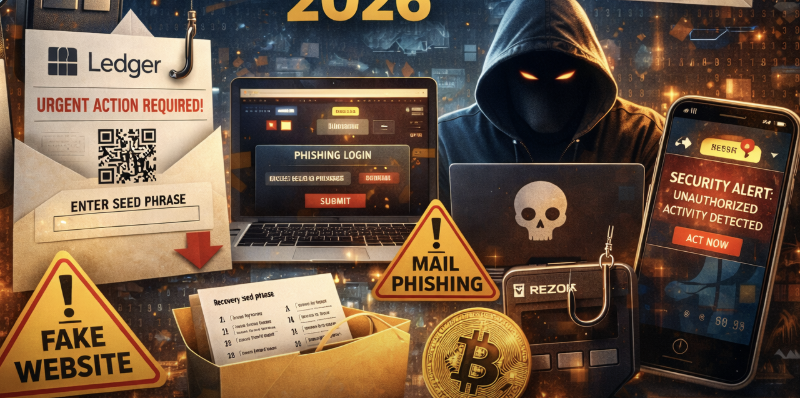
Scammers have been sending physical letters to users of devices such as Ledger and Trezor. These letters:
- Appear professionally printed with official logos
- Claim there is a “security issue” or “urgent verification requirement”
- Include QR codes leading to fake websites
- Instruct users to enter their seed phrase to “secure” their wallet
These fake sites closely mimic official wallet interfaces. Once a victim enters their seed phrase, attackers immediately gain full control over the wallet.
Important: No legitimate wallet provider will ever ask for your seed phrase. If anyone requests it by email, phone, SMS, or physical mail, it is a scam.
Other Common Crypto Phishing Tactics in 2026
Phishing attacks are no longer limited to email. Today’s scams use multiple channels simultaneously.
1. Fake Websites
Attackers create nearly identical copies of legitimate wallet or exchange sites. Small differences in domain names can be difficult to detect.
2. Email and SMS Spoofing
Scammers send messages claiming:
- “Unauthorized activity detected”
- “Account suspended”
- “Immediate verification required”
These messages create urgency to push victims into clicking malicious links.
3. QR Code Phishing
QR codes in emails, ads, or physical letters direct users to fraudulent login portals designed to steal credentials or seed phrases.
4. AI-Enhanced Social Engineering
Artificial intelligence is now used to create highly convincing emails, fake support conversations, and even voice impersonation scams.
Why These Attacks Work
Phishing succeeds because it exploits human psychology, not just technology.
Common manipulation tactics include:
- Urgency: “Act now or lose access”
- Authority: Impersonating official support teams
- Fear: Warning of security breaches
- Familiarity: Using branding identical to trusted companies
The more realistic the communication appears, the more likely users are to trust it.
How to Protect Yourself From Crypto Phishing Attacks
The most effective defense is strict security discipline.
1. Never Share Your Seed Phrase
Your seed phrase is the master key to your wallet. Store it offline and never enter it on any website.
2. Verify URLs Manually
Always type official website addresses directly into your browser instead of clicking links in emails or messages.
3. Be Skeptical of Physical Mail
If you receive a letter instructing you to scan a QR code or verify your wallet, treat it as suspicious.
4. Enable Security Features
Use two-factor authentication, anti-phishing codes, and hardware wallet PIN protection.
5. Educate Others
Many phishing victims are new crypto users. Sharing awareness can prevent losses within your network.
What to Do If You Suspect a Phishing Attempt
If you believe you received a phishing message:
- Do not click any links.
- Do not scan QR codes.
- Do not respond.
- Report the incident to the official support team of the wallet or exchange directly through their verified website.
If you have already entered your seed phrase on a suspicious site, immediately transfer remaining funds (if possible) to a new wallet with a newly generated seed phrase.
The Bottom Line
Crypto phishing attacks in 2026 are more advanced, multi-channel, and psychologically manipulative than ever before. From fake login portals to professionally printed phishing letters, scammers are targeting hardware wallet users with increasing precision.
The single most important rule remains unchanged:
Never share your seed phrase with anyone.
Staying informed and maintaining strong security habits are your best defenses against irreversible financial loss.
If you found this article helpful, share it with fellow crypto holders to help prevent phishing losses.
For more educational guides on crypto security, wallet protection, and scam awareness, subscribe to our blog and stay updated on the latest threats affecting the crypto industry.
If you or someone you know has been targeted by a phishing attack, take action immediately and seek professional guidance before further losses occur.
Your security starts with awareness.